* Les prix de nos produits sont sujets à changements sans préavis.
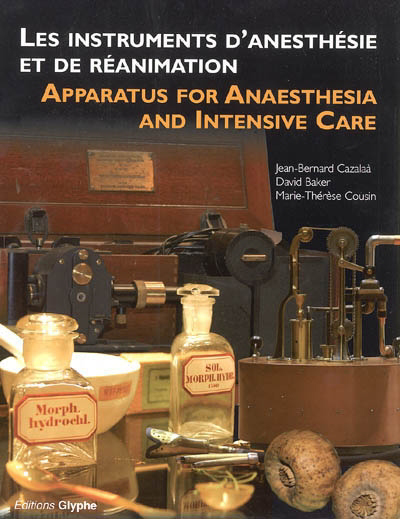
Rassemble environ 150 appareils exposés durant le World congress of anaestesiologists (2004), qui témoignent de l'histoire de l'anesthésie et de la réanimation et de l'évolution des techniques. Ces appareils étaient conçus pour stocker, administrer et contrôler les effets des substances anesthésiantes.
Apparatus for anaesthesia and intensive care, 1847-1970 . In October 1846, William T.G. Morton, a dentist, performed the first public anaesthesia at the Massachusetts General Hospital in Boston. It was the end of abominable pains and swift excisions. From then on, the patient would sleep under the influence of sulphuric ether.. All over the world, numerous apparatus were invented. The techniques evolved and complications were encountered with the appearance of new anaesthetic agents. A real saga began. Then, closed circuit and artificial ventilation became a real medical specialization, offering narcosis a new start and increasing safety. Automated and electrical devices would come later.. Apparatus for Anaesthesia and Intensive Care - France, Germany, United-Kingdom (1847-1970) gathers more than one hundred and fifty machines presented during the 2004 World Congress of Anaesthesiologists in Paris.. Such a survey of the equipment used in anaesthesia and intensive care is timely. The collection of images, backed up by authoritative texts, will delight students, specialists and historians..